Why Your Paint Is Peeling (And How to Fix It)
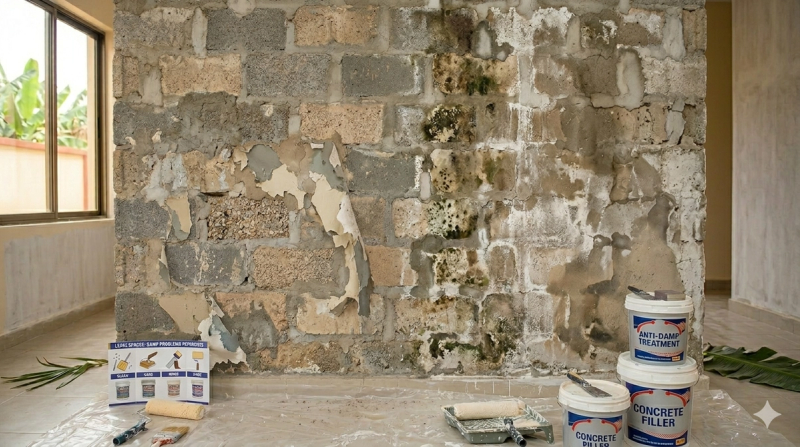
You painted your house six months ago. The colour was beautiful. The finish was smooth. And then one day you notice a small bubble near the window. Then a crack. Then entire sheets of paint lifting off the wall like old wallpaper.
Sound familiar? You're not alone. Peeling paint is the number one paint complaint in Nigeria, and it's almost never the fault of the paint itself.
Let's diagnose the real causes — and more importantly, how to fix each one permanently.
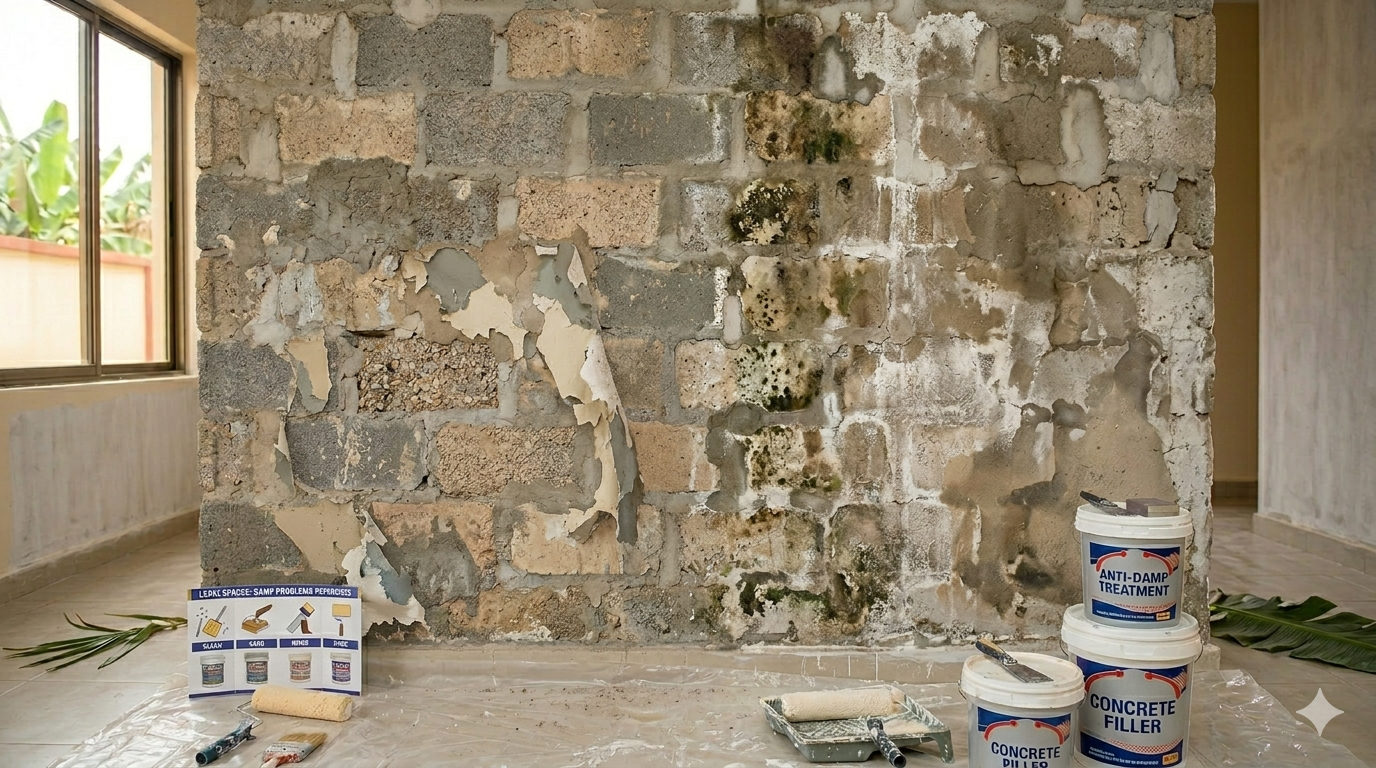
Cause #1: Moisture and Damp
The single biggest cause of paint failure in Nigeria.
What It Looks Like
- Paint blisters (bubbles under the surface)
- Large sheets peeling off, often with damp patches visible underneath
- Mould or mildew visible beneath peeling areas
- Musty smell near affected walls
Why It Happens
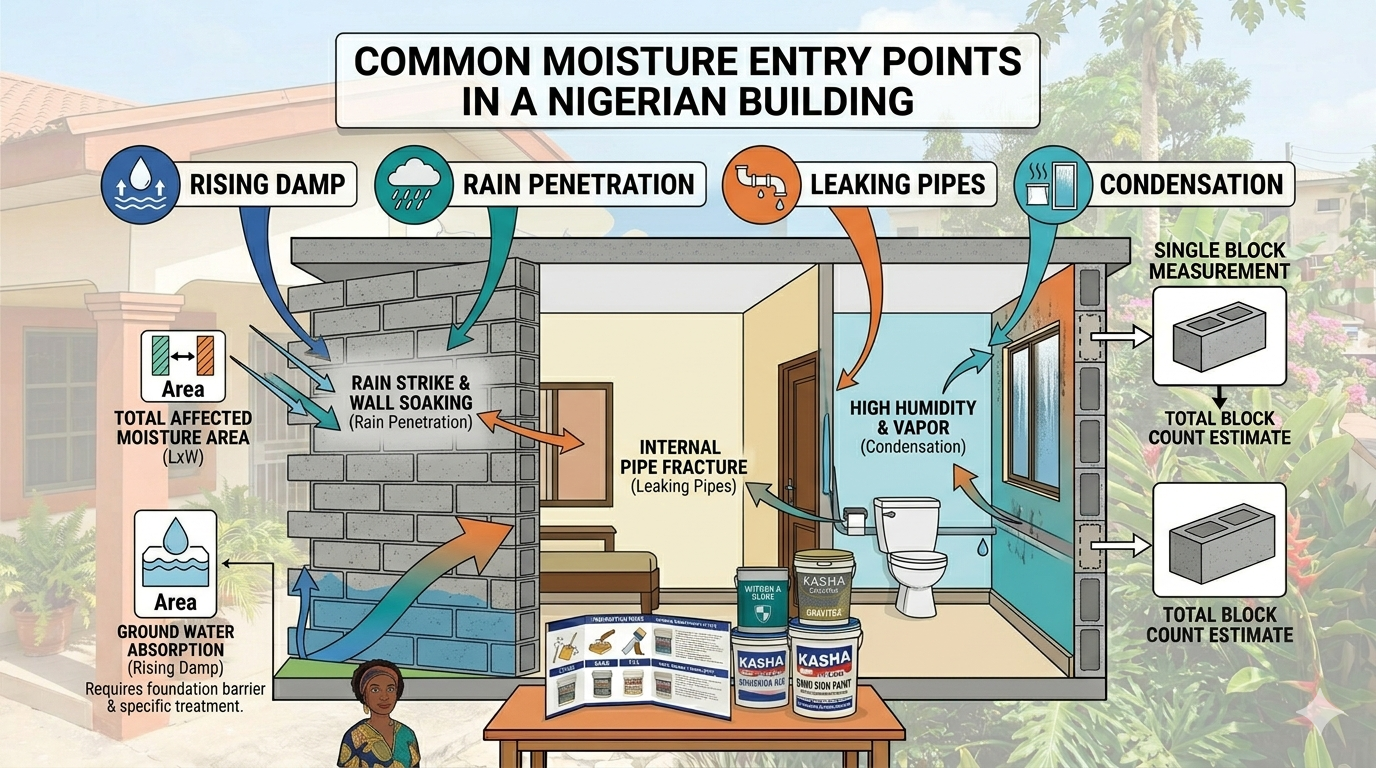
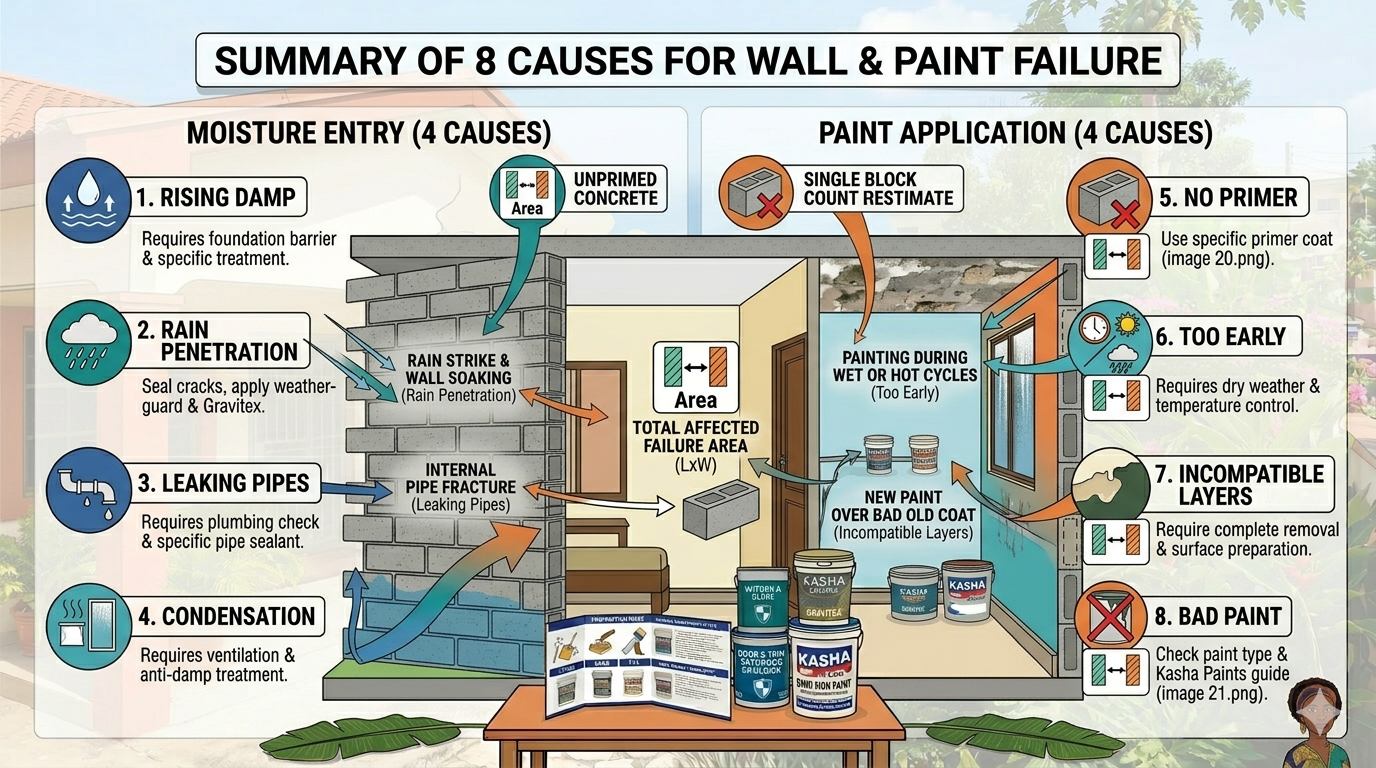
Water gets behind the paint film. Since paint forms a protective barrier, trapped moisture pushes outward, breaking the bond between paint and wall. Sources include:
- Rising damp — groundwater wicking up through the foundation (very common in Nigerian buildings without damp-proof courses)
- Leaking plumbing behind walls
- Rain penetration through cracked exterior walls or failed external paint
- Condensation in bathrooms, kitchens, and poorly ventilated rooms
How to Fix It
- Identify and eliminate the moisture source — this is non-negotiable. No paint will survive ongoing damp.
- Scrape off all peeling and blistered paint
- Let the wall dry completely (this may take days or weeks)
- Treat with anti-mould solution
- Apply a damp-seal / damp-proof primer
- Repaint with 2 coats of quality emulsion
Pro Tip: For rising damp, you may need a professional to install a damp-proof course (DPC). For rain penetration, repair cracks and apply quality exterior masonry paint.
Cause #2: Painting Over a Dirty Surface
What It Looks Like
- Paint peels in patches, often with dust visible on the back of peeled flakes
- Happens relatively soon after painting (within weeks)
- The wall surface underneath looks dusty or chalky
Why It Happens
Dust, grease, cobwebs, or dirt create a barrier between the paint and the wall. The paint bonds to the dust layer, not the wall. When the dust layer loosens, the paint comes with it.
This is especially common:
- After construction (cement dust on all surfaces)
- In kitchens (grease residue on walls)
- In rooms that were closed up for a long time (thick dust buildup)
How to Fix It
- Remove all peeling paint
- Wash the wall thoroughly with water and mild detergent
- Rinse with clean water and let dry completely
- Apply primer on bare areas
- Repaint
Prevention: Always wash walls before painting. It's a simple step that prevents this entirely.
Cause #3: Skipping the Primer
What It Looks Like
- Uneven peeling across the entire wall
- Paint flaking in small pieces rather than large sheets
- Chalky residue on the wall surface underneath
Why It Happens
Primer does three critical things:
- Seals the porous wall surface
- Creates adhesion — a bonding layer between wall and topcoat
- Blocks alkali from fresh cement that attacks paint
Without primer, paint sits on an unstable, porous surface. It soaks in unevenly, doesn't bond properly, and begins to fail.
On new block walls (which are alkaline), skipping primer is almost guaranteed to cause peeling within 6–12 months.
How to Fix It
- Scrape off failing paint
- Sand the surface smooth
- Wash and let dry
- Apply a proper primer (alkali-resistant for new/cementitious walls)
- Repaint with 2 coats of topcoat
Prevention: Never skip primer on new walls. Ever.
Cause #4: Painting Too Soon After Plastering
What It Looks Like
- White, powdery patches under peeled paint (efflorescence)
- Paint lifts in sheets
- Occurs on newly built or newly plastered walls
Why It Happens
Fresh cement and plaster need 4–6 weeks to fully cure. During this time, they release moisture and alkaline salts. If you paint too soon:
- Trapped moisture pushes paint off the wall
- Alkaline salts (efflorescence) crystallise beneath the paint, breaking the bond
- The surface hasn't stabilised, so the paint has nothing solid to grip
How to Fix It
- Scrape off all peeling paint and efflorescence
- Wire brush the wall to remove salt deposits
- Allow the wall to fully cure (if recent construction)
- Apply alkali-resistant primer
- Repaint
Prevention: Be patient. Wait at least 4 weeks after plastering before painting. 6 weeks is better.
Cause #5: Incompatible Paint Layers
What It Looks Like
- New paint layer peels away from the old layer (you can see the old colour underneath)
- Peeling happens specifically at the boundary between old and new paint
- Often occurs when repainting
Why It Happens
- Oil-based paint applied over water-based (or vice versa) without proper preparation — the layers don't bond
- Gloss paint over emulsion without sanding — the glossy surface is too smooth for new paint to grip
- Low-quality paint over high-quality paint — different formulations may not adhere
How to Fix It
- Remove the peeling top layer
- Sand the old paint surface to create a rough "key" for adhesion
- Apply a bonding primer / universal primer
- Repaint with compatible paint
Prevention: When repainting, lightly sand glossy surfaces first. If changing paint types, always use a primer between layers.
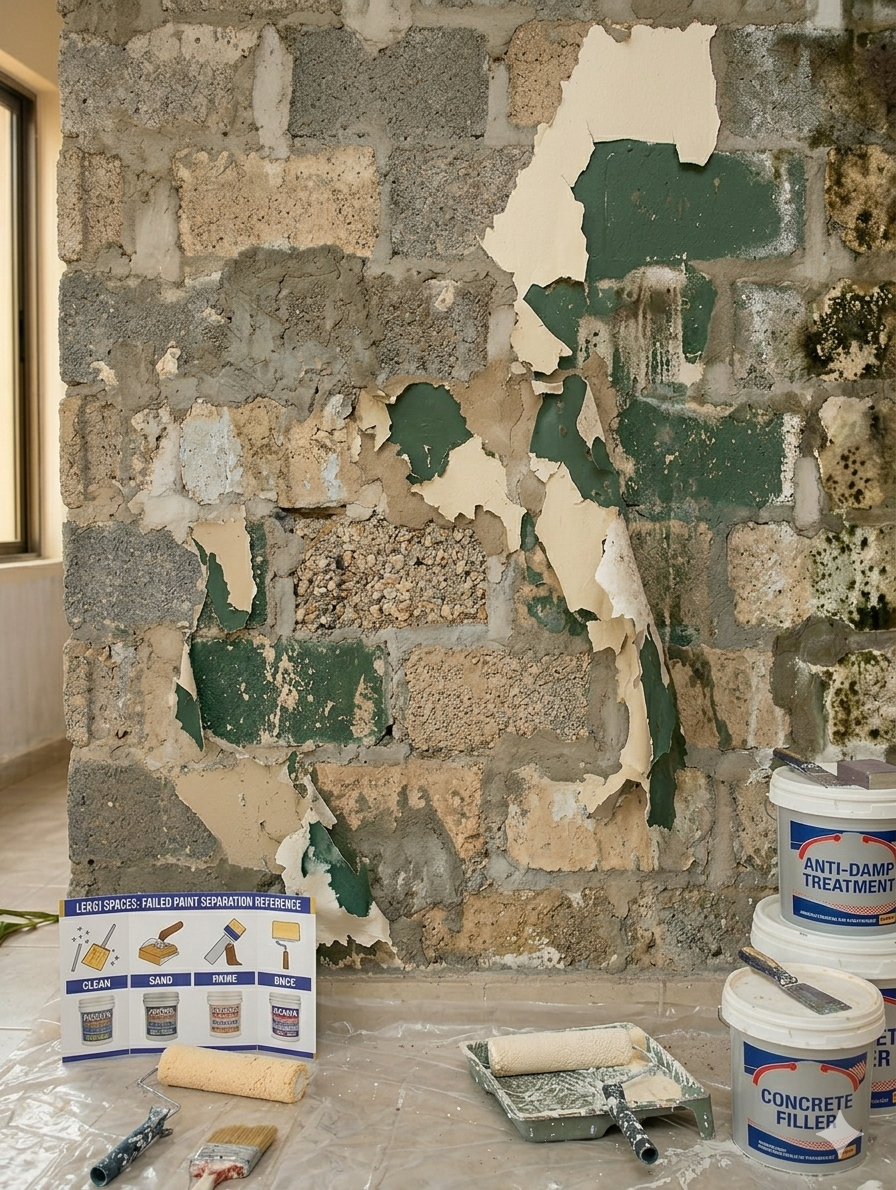
Cause #6: Low-Quality or Expired Paint
What It Looks Like
- Chalking (powdery surface that rubs off on your hand)
- Fading and peeling within a few months
- Poor coverage that never looks consistent
Why It Happens
Not all paint is created equal. Cheap paint often has:
- Low binder content (the binder is what makes paint stick)
- Excessive fillers (chalk, calcium carbonate) that add volume but not performance
- Poor pigment quality that fades in sunlight
Expired paint (paint stored for years, or frozen/overheated) may have:
- Separated components that don't mix back properly
- Dried or clumped binder
- Bacterial contamination (yes, water-based paints can go bad)
How to Fix It
- Scrape and sand the failing paint
- Repaint with quality, in-date paint from a reputable brand
Prevention: Buy quality paint from trusted suppliers. Check the manufacturing date on the tin. Store paint in a cool, dry place. If a price seems too good to be true, the paint is probably diluted or substandard.
Cause #7: Sun and Heat Damage
What It Looks Like
- Peeling and blistering on exterior walls that face direct sun
- Fading and chalking on sun-exposed surfaces
- Interior walls near windows may also be affected
Why It Happens
Nigeria sits in the tropics — direct sun can heat dark-coloured walls to over 60°C. This causes:
- Dry heat blistering — the top layer of paint dries too quickly in hot sun while the lower layers are still wet, trapping solvents/moisture
- UV degradation — ultraviolet light breaks down paint binders over time
- Thermal cycling — walls expand in the heat and contract at night, stressing the paint film
How to Fix It
- Scrape blistered/peeling paint
- Sand smooth, wash, and prime
- Repaint with heat-resistant or UV-resistant exterior paint
- Paint early in the morning or late afternoon — never in direct hot sun
Prevention: Use quality exterior paint rated for tropical conditions. Avoid painting walls while they're hot from sun exposure. Light colours reflect more heat and last longer on sun-facing walls.
Cause #8: Structural Movement and Cracks
What It Looks Like
- Paint cracks along straight lines (following structural cracks)
- Peeling concentrated along building joints or corners
- Recurring in the same locations after repainting
Why It Happens
Buildings settle over time. In Nigeria, this is exacerbated by:
- Poor foundation design — buildings settling unevenly
- Waterlogged soil — seasonal changes cause ground movement
- Overloaded structures — adding floors to buildings not designed for them
When the wall cracks, the paint has no choice but to crack and peel with it.
How to Fix It
- If structural cracks are serious (wide, growing, or diagonal), consult a structural engineer
- For cosmetic cracks: open the crack slightly with a scraper, fill with flexible filler or caulk, sand smooth
- Apply a flexible crack-bridging primer over repaired areas
- Repaint
Prevention: Use elastic or flexible fillers for known crack-prone areas. Some premium paints have crack-bridging properties for surfaces prone to minor movement.
Summary: Quick Diagnosis Guide
| Symptom | Most Likely Cause | Fix |
|---|---|---|
| Bubbles/blisters + damp patches | Moisture | Find & fix water source |
| Peeling within weeks | Dirty surface | Wash, prime, repaint |
| Peeling on new walls + white powder | Painted too soon / no primer | Wait, prime properly |
| New paint peeling off old paint | Incompatible layers | Sand, prime between layers |
| Chalky, powdery surface | Low-quality paint or UV damage | Repaint with quality product |
| Peeling on sun-facing walls | Heat/UV damage | Use exterior UV-resistant paint |
| Peeling along cracks | Structural movement | Fill cracks, use flexible filler |
Need Help Diagnosing Your Peeling Walls?
Send us a photo of your peeling paint on WhatsApp — our team can usually identify the cause from a picture and recommend the right solution.
- View our paints and primers — quality products that prevent peeling
- Read our wall preparation guide — proper prep prevents most peeling issues
- Get a free inspection and quote — we'll assess your walls in person
- WhatsApp us a photo — quick diagnosis from our experts
Kasha Paints — Giving value to your money.