Best Paint for Nigerian Weather: Interior vs Exterior Guide
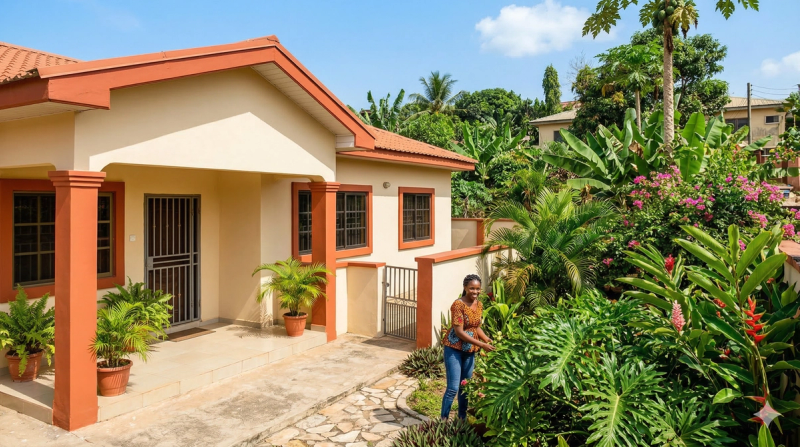
If you've ever watched your freshly painted wall start peeling after one rainy season, you know that choosing the right paint in Nigeria isn't just about colour — it's about survival. Nigeria's tropical climate throws everything at your walls: intense UV radiation, torrential rain, high humidity, and the dry, dusty harmattan winds.
In this guide, we'll break down exactly which paints work best for Nigerian weather conditions, the key differences between interior and exterior paints, and how to make a choice that lasts.
Understanding Nigeria's Climate Challenges
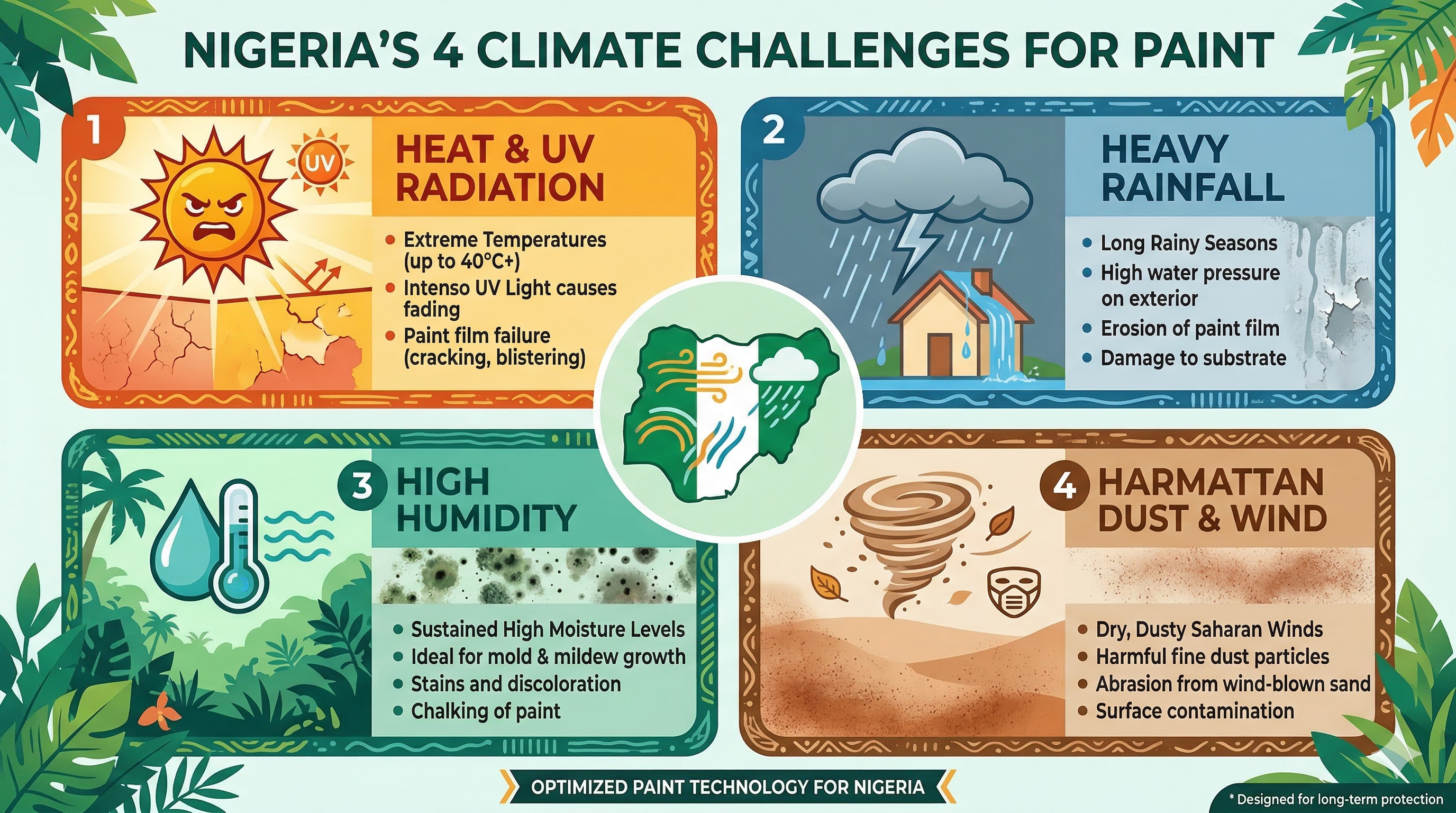
Nigeria's weather varies by region, but most areas share these paint-destroying factors:
Heat and UV Radiation
Temperatures regularly exceed 35°C across most of Nigeria. UV rays break down paint pigments, causing fading and chalking. Without UV-resistant paint, your beautiful exterior colour can look washed out within months.
Heavy Rainfall
The rainy season (April–October in the south, June–September in the north) dumps hundreds of millimetres of rain on your building. Water penetration is the number one cause of paint failure in Nigeria. It leads to blistering, peeling, and mould growth.
Humidity
Coastal cities like Lagos and Port Harcourt experience humidity levels of 80–90%. High moisture content in the air means walls take longer to dry and are more prone to fungal growth. Interior paints in these areas need to be breathable and mould-resistant.
Harmattan
The dry, dusty harmattan season (November–March) brings fine Saharan dust and extremely low humidity. This causes surface cracking in paints that aren't flexible enough, and dust adhesion on tacky surfaces.
Interior Paint: What Works Best Indoors in Nigeria
Interior walls don't face rain and UV directly, but they deal with humidity, condensation, cooking fumes, and everyday wear.
Best Interior Paint Types
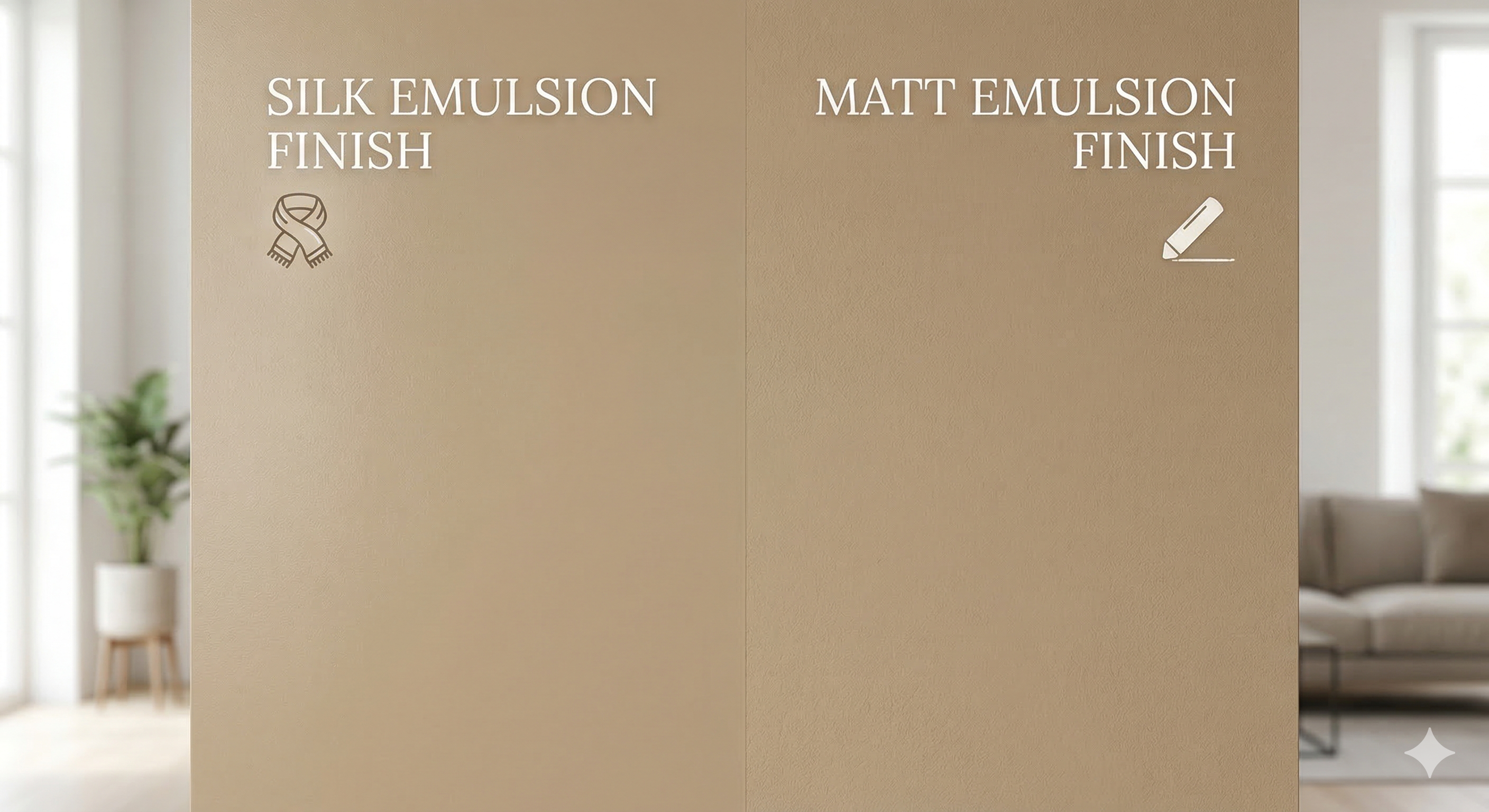
1. Silk Emulsion (Recommended)
Silk emulsion is the gold standard for Nigerian interiors. It offers:
- A soft sheen that reflects light beautifully
- Washability — you can wipe off stains and marks
- Good moisture resistance for bathrooms and kitchens
- Available in a wide range of colours
Best for: Living rooms, bedrooms, dining areas, hallways
2. Matt Emulsion
Matt emulsion provides a flat, non-reflective finish that hides wall imperfections well. It's more affordable than silk but not as washable.
Best for: Ceilings, guest rooms, low-traffic areas
3. Satin Finish
A middle ground between silk and matt. Satin offers durability with a subtle sheen that's easier to clean than matte.
Best for: Kitchens, bathrooms, children's rooms, high-traffic corridors
Interior Paint Tips for Nigerian Homes
- Use light colours in rooms without air conditioning — they reflect heat and make spaces feel cooler
- Choose washable paints for kitchens where cooking smoke is common
- Apply a primer first on new block walls to seal the surface and reduce paint consumption
- Ensure ventilation during and after painting — humidity can slow drying
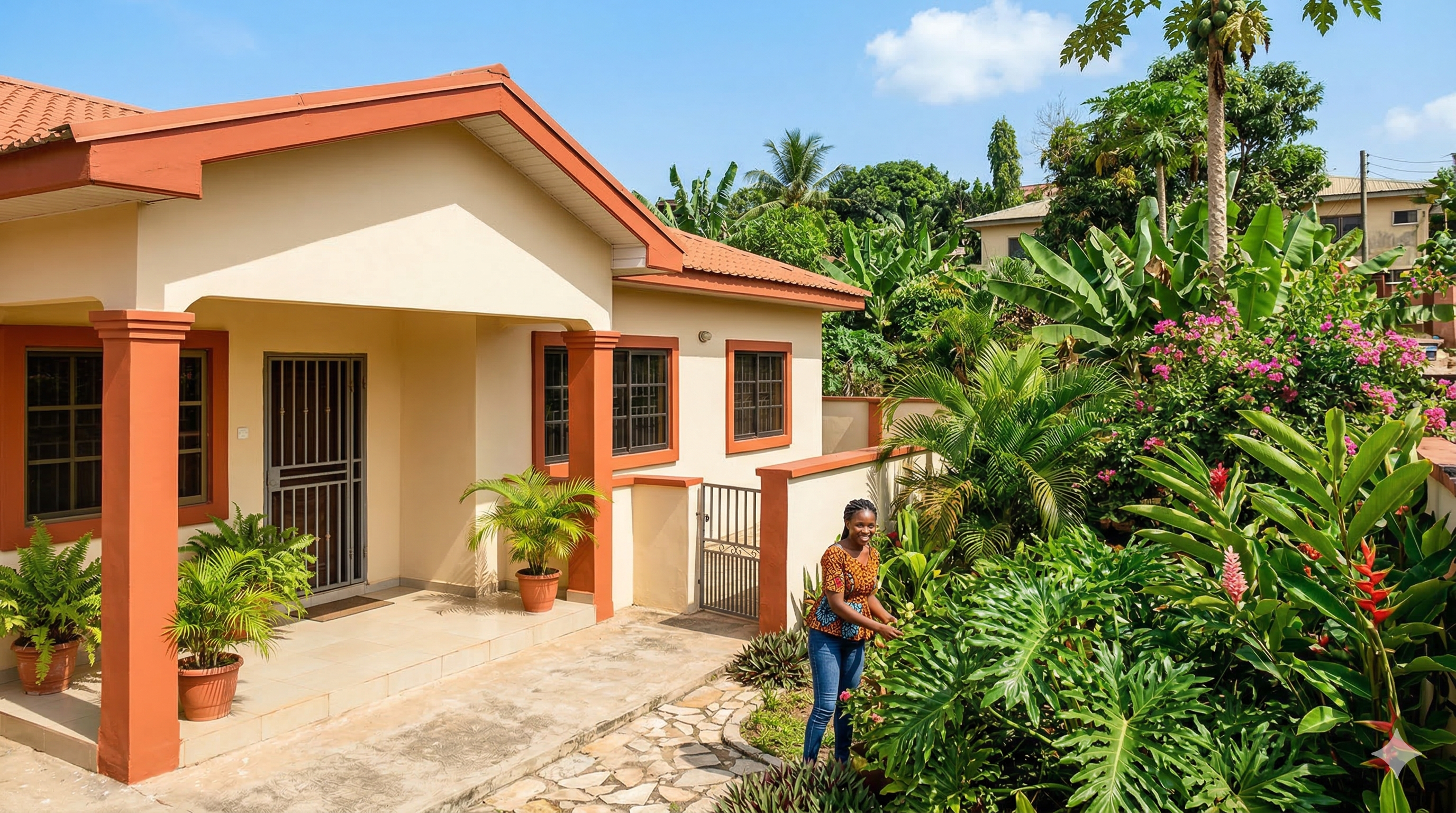
Exterior Paint: Surviving Nigerian Weather
Exterior paint takes the full force of the elements. Choosing the wrong type is an expensive mistake.
Best Exterior Paint Types
1. Weatherproof / Weather-Guard Emulsion (Highly Recommended)
Purpose-built for exterior use, weather-guard paints contain:
- UV stabilisers to prevent fading
- Anti-fungal additives to stop mould and algae
- Flexible resins that expand and contract with temperature changes
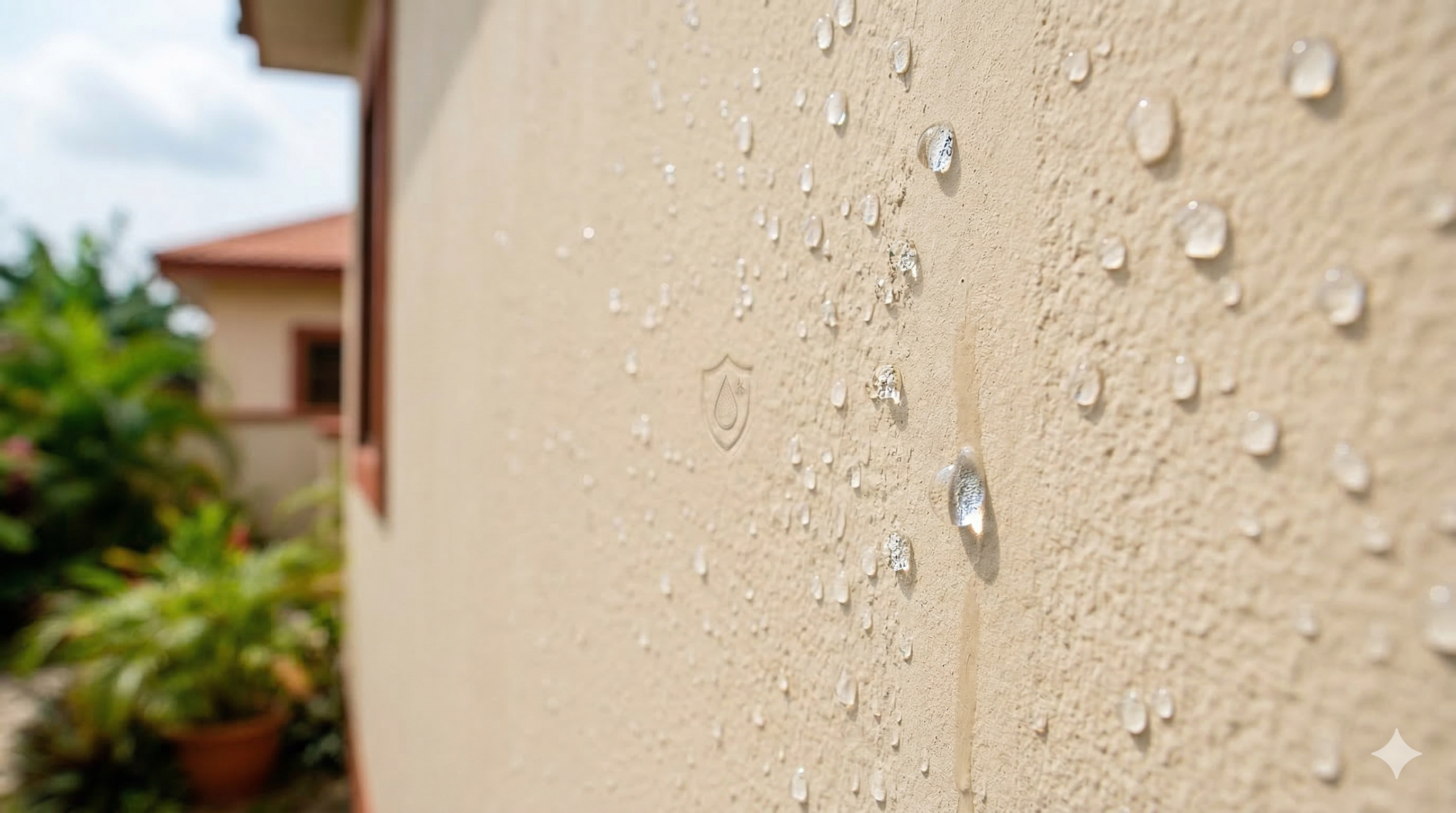
- Water-repellent properties
This is what we recommend for every exterior wall in Nigeria. Products like Kasha Weatherguard are specifically formulated for our climate.
Best for: All exterior walls, boundary fences, outdoor structures
2. Textured / Sand-Textured Coatings
Textured paints add a decorative rough finish while providing an extra-thick protective layer. They're excellent at:
- Hiding cracks and imperfections in old walls
- Providing superior water resistance due to thickness
- Adding visual interest to plain surfaces
Best for: Front-facing walls, feature walls, older buildings with surface imperfections
3. Gloss / Satin Enamel (for Trim)
While not used for large wall areas, gloss and satin enamels are essential for:
- Window frames and door frames
- Metal gates and railings
- Fascia boards and woodwork
These provide a hard, wipeable surface that resists moisture and scratches.
Interior vs Exterior Paint: Key Differences
| Feature | Interior Paint | Exterior Paint |
|---|---|---|
| UV Resistance | Low (not needed) | High (essential) |
| Water Resistance | Moderate | Very High |
| Flexibility | Standard | High (for expansion/contraction) |
| Anti-Fungal | Optional | Essential |
| VOC Levels | Low (for indoor air quality) | Can be higher |
| Washability | Varies by type | Very high |
| Coverage | 8–12 m² per litre | 6–10 m² per litre |
| Cost | ₦15,000–₦35,000 per 20L | ₦25,000–₦50,000 per 20L |
Important: Never use interior paint outdoors. It will fail within weeks. Exterior paint can technically be used indoors, but it has higher VOC levels and doesn't provide the smooth finish you want inside.
How to Choose: A Quick Decision Guide
- Is it an exterior wall? → Use weather-guard emulsion. No exceptions.
- Is it a bathroom or a kitchen? → Use satin or silk emulsion (moisture-resistant)
- Is it a living room or a bedroom? → Use silk emulsion for a premium look, or matt for budget
- Is it a ceiling? → Matt emulsion in white or off-white
- Is it metal or wood? → Use gloss or satin enamel
- Is it an old wall with cracks? → Consider textured coating
Common Mistakes Nigerians Make When Buying Paint
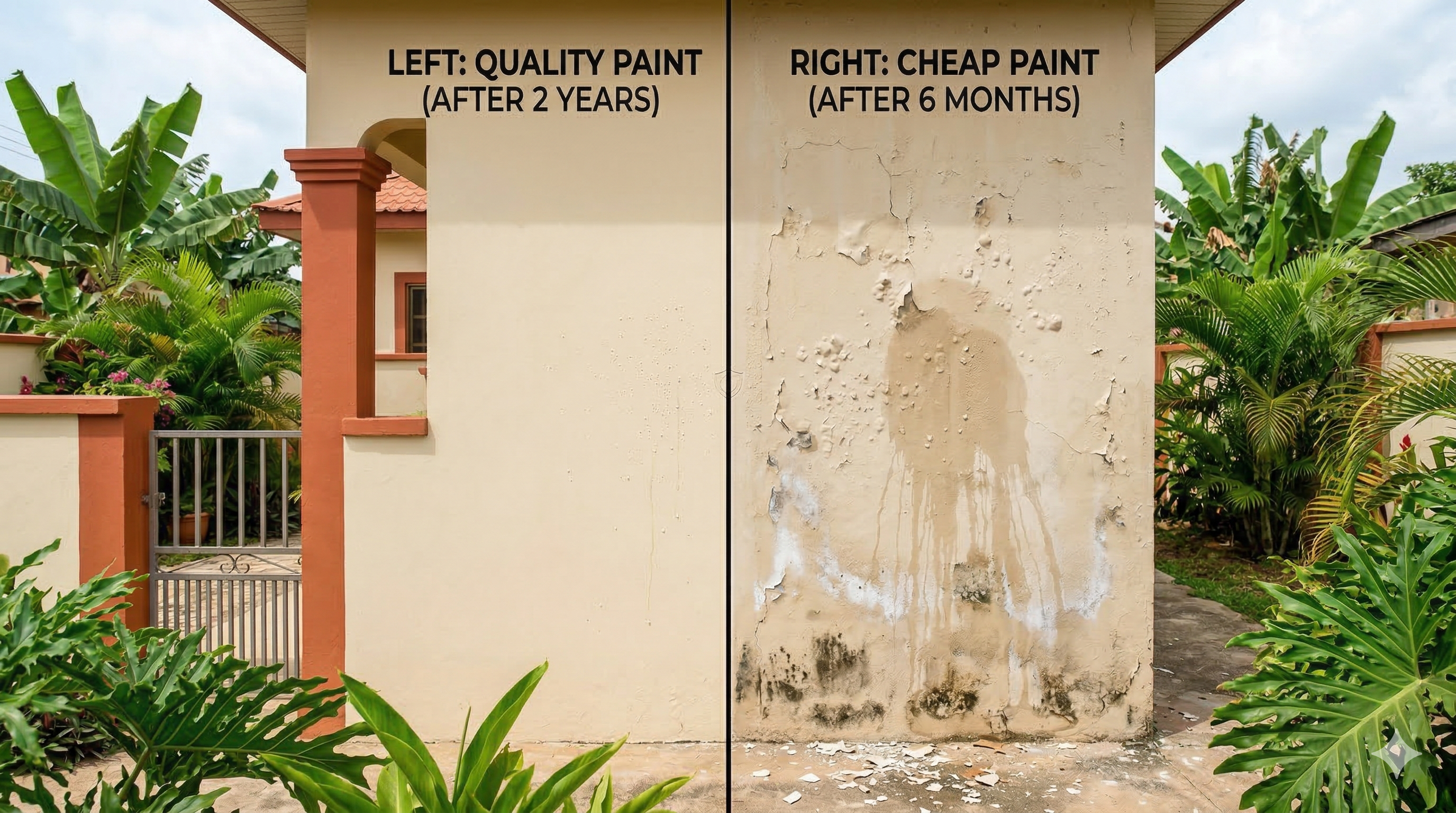
- Buying the cheapest option — Low-quality paint needs 3–4 coats and fails faster, costing more long-term
- Using interior paint outside — It will peel within the first rainy season
- Skipping primer — This increases paint consumption by 30–40% and reduces adhesion
- Painting during rainy season — Exterior painting should be done during the dry season for best results
- Ignoring the surface condition — Paint doesn't fix cracks; it hides them temporarily
Recommended Products for Nigerian Weather
At Kasha Paints, we manufacture paints specifically formulated for the Nigerian climate:
- Kasha Silk Emulsion — Premium interior finish with excellent washability
- Kasha Texcoat— Our toughest exterior paint. Rain, sun, harmattan-proof.
- Kasha Gravitex — Sand-textured for decorative exterior walls
- Kasha Gloss Finish — For doors, gates, and metalwork
- Kasha Universal Primer — Essential first coat for all surfaces
Browse our full colour chart to find the perfect shade for your project.
Conclusion
The Nigerian climate demands more from your paint than in temperate countries. The key is matching the right paint type to the right surface: weather-guard for exteriors, silk or satin emulsion for interiors, and always use a primer first.
Investing in quality paint saves you money long-term — you'll repaint less often, and your home will look better for years.
Need help choosing? Chat with us on WhatsApp or request a free quote.
Kasha Paints — Giving value to your money.